
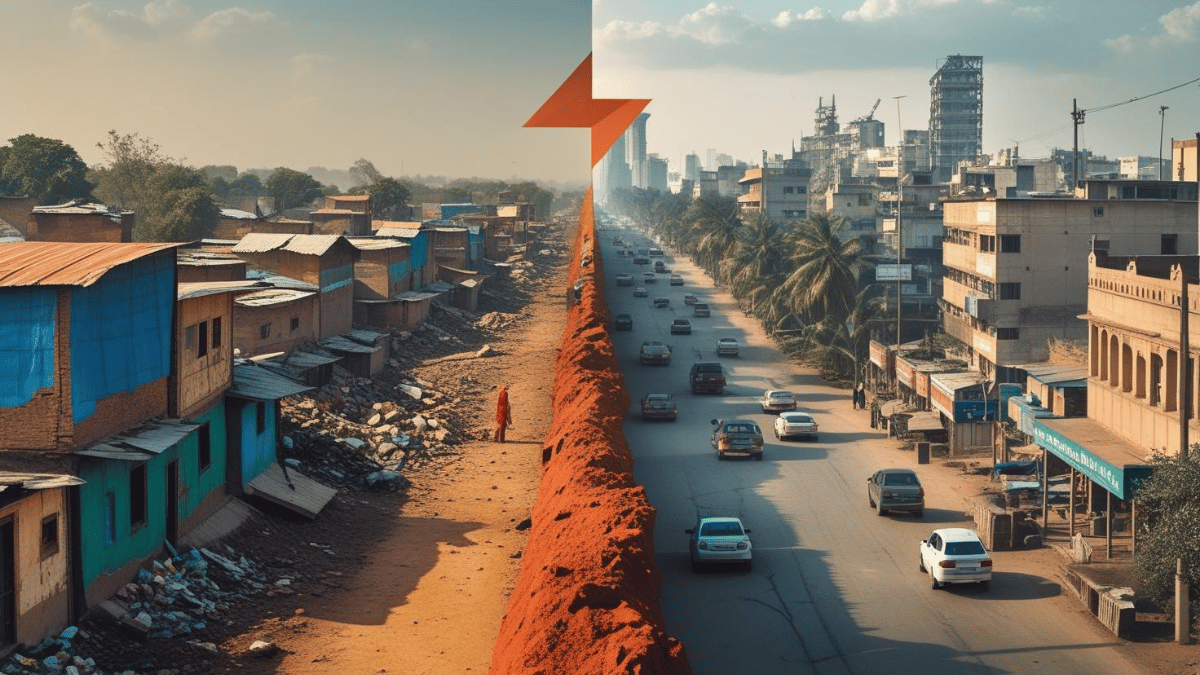

In the past decade, India has experienced a rapid and unprecedented transformation that has taken the world by surprise. Often considered a developing country with a large population, poverty, and a complex socio-economic landscape, India has defied expectations to emerge as one of the most powerful economies in the world.
The Road Less Traveled: India’s Steady Ascent
India’s journey from poverty to power wasn’t the result of a single policy or event. Instead, it was a combination of strategic decisions, technological innovations, and societal changes that gradually built momentum.
Key Drivers Behind India’s Transformation
- Digital Revolution: The Tech Boom
- In the last decade, India became one of the world’s leading tech hubs. With an increasing number of startups, a young, tech-savvy population, and the rapid adoption of digital services, India has fostered an environment of innovation. From fintech to e-commerce, the digital revolution has spurred economic growth and reduced barriers to business entry.
- Make in India: A Manufacturing Overhaul
- Launched in 2014, the Make in India initiative aimed to transform India into a global manufacturing hub. The policy encouraged foreign direct investment (FDI), improved infrastructure, and enhanced ease of doing business. Over time, this led to an increase in domestic production and the establishment of global supply chains within India.
- Infrastructure Development: A Game Changer
- Roads, airports, and railways — India’s infrastructure overhaul was key to its economic transformation. From new expressways to world-class metro systems in cities like Delhi and Mumbai, the nation modernized its transport network, facilitating trade and boosting productivity.
- The Rise of the Indian Middle Class
- Economic reforms led to an expansion of the middle class, a vital element in driving both consumption and investment. With increased purchasing power and access to education, the middle class has created a vast market for goods and services, fostering domestic industries.
Breaking Barriers: How India Addressed Social and Economic Inequities
India’s economic growth has not come without challenges. The country has made concerted efforts to address social and economic disparities that have existed for decades.
Tackling Poverty: The Quiet Revolution
- Direct Benefit Transfers (DBT)
- In a move that has improved financial inclusion, the government of India introduced direct benefit transfers, where subsidies and welfare payments are transferred directly to citizens’ bank accounts. This eliminated intermediaries and drastically reduced leakage in the distribution of resources.
- Mahatma Gandhi National Rural Employment Guarantee Act (MGNREGA)
- This flagship program helped lift millions out of poverty by guaranteeing at least 100 days of wage employment per year to rural households. This initiative played a vital role in rural development, reducing migration and fostering local economic growth.
- Education Reforms: A Shift in Focus
- Over the last decade, India has heavily invested in improving the quality of education. Focused efforts on primary and secondary education, skill development programs, and the digitalization of education systems have empowered millions to break free from the cycle of poverty.
A Global Player: India’s Foreign Policy Shift
India’s transformation has also been accompanied by a redefined foreign policy that has opened new economic and strategic opportunities.
Strengthening Diplomatic Ties
India’s efforts to forge stronger diplomatic ties with countries around the world have paid dividends. Initiatives like the Act East Policy, Neighbourhood First, and strengthening ties with countries like the United States, Japan, and Israel have opened new avenues for investment, trade, and technology sharing.
- Regional Influence: South Asia and Beyond
- India has played a key role in shaping the South Asian regional order, not just economically but also politically. It has been an active player in regional cooperation forums such as SAARC, the Bay of Bengal Initiative for Multi-Sectoral Technical and Economic Cooperation (BIMSTEC), and the Shanghai Cooperation Organization (SCO).
- The Role in Global Trade: A Rising Power
- India’s position in global trade has improved significantly with increased exports, new trade agreements, and participation in multilateral trade organizations like the World Trade Organization (WTO). The government’s commitment to improving the ease of doing business has encouraged foreign investments, including from leading multinational corporations.
- The Strategic Defense Posture
- India’s military and defense capabilities have also transformed, with new technologies and strategic defense partnerships. This has ensured India’s place as a key player in global security, countering regional threats while asserting its position in the Indo-Pacific region.
India’s Challenges: The Road Ahead
Despite its rapid rise, India faces a number of challenges that could hinder future growth if not addressed.
Sustainability and Environmental Concerns
- Urbanization and Its Impact
- Rapid urbanization has led to increased pollution, inadequate waste management, and strain on resources. The country must shift toward sustainable practices and green technologies to manage growth without compromising the environment.
- Agricultural Reform
- Although India has seen substantial improvements in non-agricultural sectors, its agricultural industry continues to face challenges. Addressing farmer distress, ensuring food security, and modernizing agriculture are key issues that require attention.
Political and Social Tensions
- Religious and Social Divides
- India’s diversity has always been one of its strengths, but it has also been a source of internal conflict. Tensions along religious, regional, and ethnic lines pose significant challenges to social harmony.
- Income Inequality
- While India’s middle class has expanded, income inequality remains a pressing concern. Bridging the gap between the rich and the poor is essential for ensuring sustainable and inclusive growth in the coming years.
The Final Verdict: India’s Future Potential
India’s transformation over the last decade has been nothing short of extraordinary. From a country once known for its poverty and underdevelopment, it is now a global powerhouse with immense influence on the world stage. However, its future trajectory depends on how well it addresses the ongoing challenges that come with rapid growth.
Key Takeaways:
- Digital Transformation: India’s tech sector has experienced explosive growth, positioning it as a leader in global innovation.
- Manufacturing Hub: The Make in India initiative has fostered an era of industrial growth, attracting significant foreign investments.
- Poverty Alleviation: Programs like DBT and MGNREGA have helped lift millions out of poverty, improving financial inclusion.
- Global Influence: India’s foreign policy has enabled it to secure trade agreements, boost diplomatic relations, and enhance its defense capabilities.
- Challenges Ahead: The nation must focus on sustainable development, bridging income inequality, and fostering social cohesion to maintain long-term growth.
India’s transformation over the last ten years is a testament to the power of strategic policies, technological innovation, and societal resilience. The next decade promises even more growth and challenges, but one thing is clear: India is on the path to becoming a global leader, and its journey is only just beginning.
