
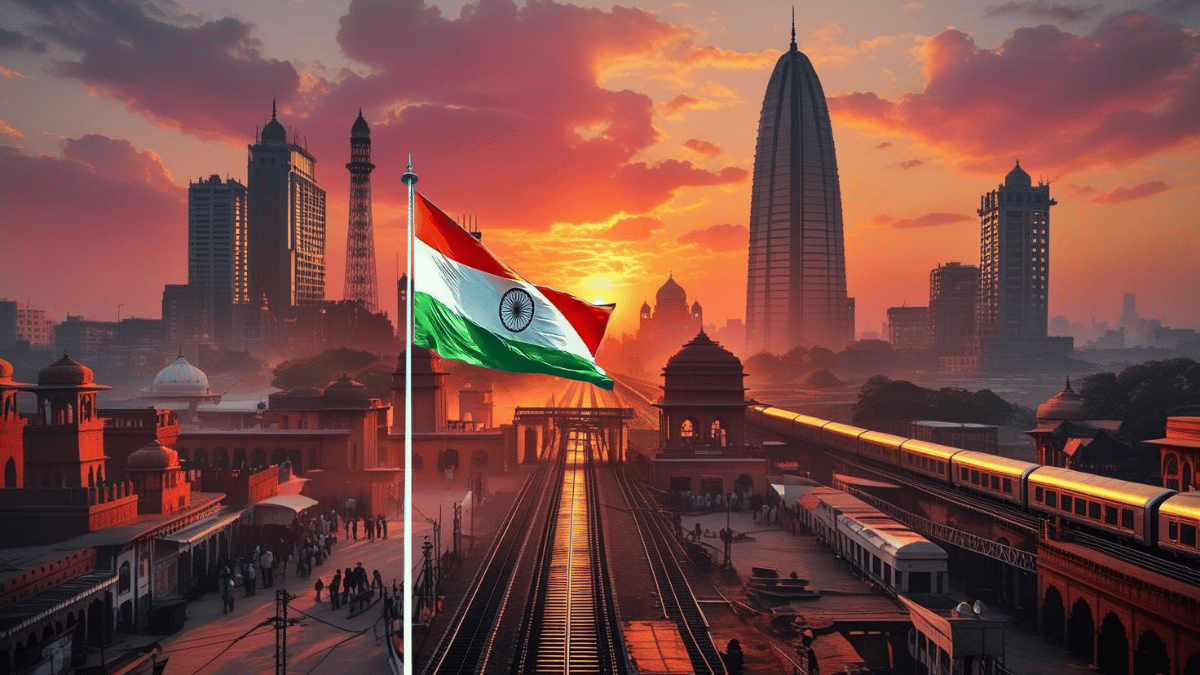

India, with its diverse cultures, rich history, and dynamic economy, is no longer just a developing nation—it’s rapidly emerging as a global powerhouse. What was once a country known primarily for its challenges is now at the forefront of geopolitical, economic, and technological change. The scale and speed of India’s growth in recent years present a compelling case for why its rise is not only inevitable but unstoppable.
1. A Booming Population with a Young Workforce
India’s population, which stands at over 1.4 billion people, is one of the largest in the world. More importantly, the country’s population is incredibly youthful, with nearly 50% of its citizens under the age of 25. This youthful demographic is crucial to India’s rise because it provides a significant workforce for decades to come, making it a global labor market leader.
Unlike the aging populations in Europe and China, India’s youthful population is a significant economic asset. The United Nations predicts that India’s working-age population (15-64 years) will increase by about 500 million by 2050. This large, youthful workforce will be a driving force behind India’s economic growth, contributing to higher productivity, lower labor costs, and innovation. With fewer older adults to support compared to aging nations, India has a unique opportunity to harness this demographic dividend, paving the way for a promising future.
Furthermore, India’s booming population contributes to the country’s consumption patterns. With more young people, there’s an increasing demand for goods and services, ranging from education and healthcare to entertainment, technology, and consumer goods.
2. The Digital Revolution
India’s digital transformation is one of the most striking elements of its rise. The government’s “Digital India” initiative, launched in 2015, has laid the groundwork for a tech revolution that has taken the world by surprise. India is currently home to over 800 million internet users, and this number is expected to rise even further as smartphone penetration continues to grow.
The tech industry in India is flourishing. The country is now considered one of the largest tech hubs in the world, with cities like Bengaluru, Hyderabad, and Pune becoming global epicenters for software development, tech innovation, and startups. The Indian IT services sector, valued at $150 billion in 2020, remains a major player in global outsourcing, and India continues to lead the world in terms of the number of software engineers and developers it produces annually.
Moreover, India’s fintech sector is one of the fastest-growing globally. With mobile wallets like Paytm and PhonePe, India has become a leader in digital payments. In 2020, India processed over $60 billion in digital payments through the Unified Payments Interface (UPI) alone, which makes it one of the world’s largest real-time payment systems. The digitization of financial services has enabled millions of previously unbanked individuals to access banking services, further increasing financial inclusion.
The digital revolution in India has not only expanded into banking but also into education, healthcare, and entertainment, significantly improving the lives of its citizens. Online learning platforms like BYJU’s are changing the educational landscape, while health-tech startups are making healthcare more accessible to rural and remote areas. India is becoming a digital giant, with increasing potential for innovation and influence in the global tech market, inspiring other nations to follow suit.
3. Sustained Economic Growth and Expanding Global Trade
India’s economic growth story is not just about numbers; it’s about resilience and transformation. In recent years, despite global financial turbulence, India has consistently posted impressive growth rates. The World Bank forecasts India’s GDP will grow by 6.3% in 2025, making it one of the fastest-growing major economies in the world. India’s robust growth trajectory positions it to become the third-largest economy globally by 2030, surpassing both Japan and Germany, instilling confidence in India’s economic future.
Multiple factors, including a growing manufacturing sector, strong services exports, and the rise of the Indian middle class, drive this sustained growth. The country is also capitalizing on global shifts in supply chains. As international companies seek to diversify their supply sources, India is becoming an increasingly attractive destination for manufacturing. In 2020, the government launched the Atmanirbhar Bharat (Self-Reliant India) campaign, aiming to bolster local industries and reduce dependency on imports, especially in sectors like electronics and pharmaceuticals.
India’s role in global trade is also expanding. The country is actively negotiating free trade agreements (FTAs) with major economic blocs, including the European Union, the United States, and ASEAN nations. India’s exports in 2021 were valued at $400 billion, and the country is now one of the world’s leading exporters of goods like textiles, pharmaceuticals, chemicals, and IT services. The Indian government’s focus on creating better trade infrastructure, such as modern ports and logistics networks, ensures the country remains a global trade hub.
4. Infrastructure Development and Urbanization
India is undergoing a massive infrastructure transformation that is crucial to its rise. Over the past decade, the government has made significant investments in roads, railways, airports, and ports. The Bharatmala Pariyojana, an ambitious road development project, aims to construct 34,800 kilometers of national highways. This will improve connectivity across the country, reduce transportation costs, and boost trade. However, this rapid development also raises concerns about its impact on the environment, and it’s important to consider these factors alongside the benefits of India’s infrastructure growth.
India is also investing heavily in its urban infrastructure. The Smart Cities Mission, launched in 2015, aims to develop 100 smart cities across the country by 2023. These cities are being designed to incorporate advanced technology for better urban management, sustainability, and livability. As urbanization increases, with over 600 million people expected to live in cities by 2031, infrastructure will be key to sustaining economic growth, improving quality of life, and attracting investment.
Furthermore, India’s focus on renewable energy is driving its transformation. The country is making substantial investments in solar and wind power, aiming to achieve 500 GW of renewable energy capacity by 2030. This shift toward cleaner energy will not only reduce India’s carbon footprint but also enhance its energy security and attract green investments from across the globe.
5. Geopolitical Influence and Soft Power
India’s rise is not just economic; it’s geopolitical. India’s influence on the global stage is increasing, and the country is positioning itself as a counterbalance to the growing influence of China. Through its participation in the Quadrilateral Security Dialogue (Quad), which includes the United States, Japan, and Australia, India is asserting its strategic role in the Indo-Pacific region.
The country’s diplomatic flexibility and non-alignment policy have earned it friends across the globe, from Western democracies to countries in Africa and the Middle East. India’s strong defense capabilities and its role in regional security have also cemented its position as a key player in global geopolitics.
In addition, India’s cultural influence is growing. Bollywood, yoga, cricket, and Indian cuisine have gained global recognition, contributing to the country’s soft power. According to the 2020 Global Soft Power Index, India ranks among the top ten nations in terms of cultural influence, and its growing diaspora around the world continues to enhance its global footprint.
Conclusion
India’s rise is not just a matter of potential; it is happening right now, driven by a combination of demographic advantages, technological innovation, economic dynamism, and geopolitical influence. The country is harnessing its strengths to reshape its future and position itself as a global leader. As it continues to focus on its young population, embrace technology, build infrastructure, and expand its international trade relationships, India is well on its way to becoming an unstoppable force in the 21st century.

1 thought on “India’s Unstoppable Rise: 5 Jaw-Dropping Facts That Will Shock You!”