
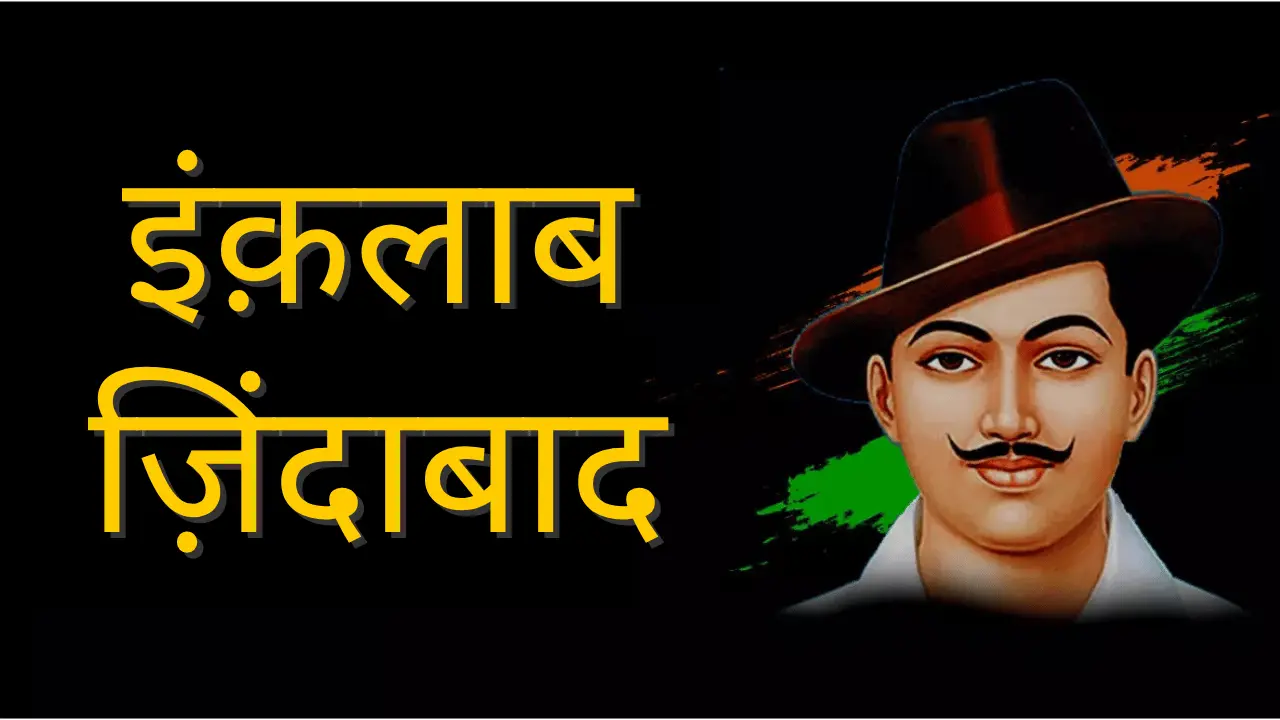

The Cry That Shook Empires
Few phrases in Indian history carry the same fire, defiance, and emotion as “Inquilab Zindabad” — meaning “Long Live the Revolution.” Born in the early 20th century, it wasn’t just a slogan; it was a spark that awakened a nation, a call that turned fear into courage, and a promise that freedom was worth every sacrifice.
More than a century later, the cry of “Inquilab Zindabad” still resounds across India — in protests, classrooms, films, and public squares. But why does a slogan born in colonial resistance continue to move people in a free India? The answer lies in something timeless — the human desire for justice, equality, and transformation.
The Revolutionary Origins of “Inquilab Zindabad”
A Slogan Forged in the Fight for Freedom
Urdu poet Hasrat Mohani first coined “Inquilab Zindabad” in the 1920s, at the height of India’s freedom struggle. The words found their truest voice through Bhagat Singh, whose courage turned them into a symbol of hope for an entire generation.
For Bhagat Singh, Inquilab wasn’t only about overthrowing British rule — it was about reshaping the very fabric of society. His revolution was one of ideas: liberty, equality, secularism, and justice.
“Revolution does not necessarily mean the use of violence. The revolution means the ultimate establishment of an order of society which may not be threatened by tyranny.”
— Bhagat Singh
How the Words Became a Movement
While many political slogans fade with time, “Inquilab Zindabad” became immortal. It echoed through underground presses, freedom rallies, and prison cells — carried by countless revolutionaries like Chandrashekhar Azad and Ram Prasad Bismil.
It belonged to no single group or party; it was every Indian’s cry for freedom, unity, and dignity.
The Meaning of “Inquilab” Beyond Rebellion
Revolution as Renewal, Not Ruin
In Urdu, “Inquilab” means revolution — but not merely destruction or revolt. It speaks of renewal — of overturning injustice to restore balance. When shouted by India’s revolutionaries, it symbolized rebirth, not chaos.
True Inquilab is as much an inner revolution as it is a social one — a transformation of conscience, courage, and compassion.
A Universal Idea in an Indian Voice
What makes “Inquilab Zindabad” so enduring is its universality. Whether in the 1920s or the 2020s, it resonates with anyone who feels silenced, oppressed, or hungry for change.
Its heartbeat aligns with struggles around the world — yet it remains deeply rooted in India’s soil, language, and spirit.
Why It Still Echoes in Modern India
1. A Symbol of Resistance Against Injustice
Though colonial rule ended decades ago, inequality, corruption, and discrimination persist. Each time citizens rise to challenge unfair systems — from farmers’ movements to student protests — “Inquilab Zindabad” returns as a moral compass, reminding us that freedom is a living struggle, not a finished story.
2. A Voice for Youth and Change
Bhagat Singh was just 23 when he gave his life for the nation — his youth a timeless symbol of fearless change.
Today’s generation may wield social media instead of weapons, but their revolutionary spirit remains the same. Whether fighting climate neglect, gender bias, or political corruption, young Indians continue Bhagat Singh’s legacy of bold idealism.
3. A Cultural and Emotional Legacy
The words “Inquilab Zindabad” are woven into India’s cultural identity — echoing through films like Rang De Basanti, patriotic songs, and literature. They’ve grown beyond politics into a cultural shorthand for courage, resistance, and pride.
“Inquilab Zindabad” in the Age of Democracy
Reinterpreting Revolution for a Free Nation
In today’s democracy, revolution no longer means rebellion against colonial power — it means standing up to complacency, injustice, and moral decay.
Modern Inquilab is found in the fight for clean governance, women’s rights, and climate action. The battleground has shifted from the streets to institutions, but the purpose remains unchanged — to build a fairer society.
From Political Chant to Social Conscience
The power of “Inquilab Zindabad” lies in its adaptability. It belongs to everyone — activists, artists, farmers, and citizens alike. It’s not an ideology but a shared dream — of a nation that never stops striving to be better.
It serves as India’s quiet conscience, reminding us that freedom is not static — it must be renewed every day through awareness and action.
The Modern Relevance of Bhagat Singh’s Dream
Revolution as a Daily Practice
Bhagat Singh saw revolution not as a single act but as an ongoing journey. In a time marked by misinformation, inequality, and social division, Inquilab reminds us to keep questioning, caring, and acting with integrity.
Every honest deed, every stand against prejudice, every effort to uplift others — these are the revolutions of our time.
Continuing the Incomplete Revolution
India gained independence in 1947, but Bhagat Singh’s greater revolution — of equality, rational thought, and social justice — remains unfinished.
To honor his vision, India must keep evolving — transforming not through violence, but through empathy, education, and civic courage.
The Echo That Never Dies
“Inquilab Zindabad” is far more than a slogan from the past. It’s a living voice that continues to pulse through India’s conscience — in every protest, reform, and act of courage.
True revolutions are not only fought with weapons but lived every day — in classrooms, courtrooms, and conversations. The real Inquilab is the courage to dream, to challenge, and to believe that change is possible.
So, when you hear the words “Inquilab Zindabad” rise once more, remember — it’s not just a chant from history. It’s India’s eternal heartbeat.
References:
For deeper insights into Bhagat Singh’s ideology and the history of “Inquilab Zindabad,” explore resources from the National Archives of India and works by historians on India’s freedom movement.
